
The Hidden Inflection: How Patent Longevity and Public Insurance Coverage Could Reshape the Diet Drug Market
This paper explores a non-obvious but potentially transformative weak signal in the diet drug sector—patent protection extension combined with emerging Medicare/Medicaid coverage pilots for GLP-1 therapies. These developments, usually analyzed separately, together could realign regulatory frameworks, capital flows, and industrial dynamics across pharmaceutical, healthcare, and consumer sectors over the next two decades.
Patent protections for key GLP-1 (glucagon-like peptide-1) drugs like semaglutide will extend into the 2030s in major markets (Chemistry World 15/04/2024). Simultaneously, new Medicare and Medicaid coverage pilots starting 2026 will fund GLP-1 weight loss drugs for beneficiaries (RitterIM 02/05/2024). This coupling signals a structural inflection point—public payers entering a historically self-pay weight management market while patent barriers constrain generic competition. This co-evolution could reshape capital allocation, market access, and innovation incentives in ways that remain underappreciated.
Signal Identification
This development qualifies as an emerging inflection indicator due to the convergence of extended patent exclusivity and the unprecedented integration of GLP-1 medicines into public insurance coverage. It surpasses a routine trend because it alters underlying industrial and regulatory logics affecting market structure and capital flows.
The plausible time horizon is 5–20 years given patent expiry timelines and ramp-up of public program adoption.
Plausibility is high given formal policy announcements and legal patent timelines.
Sectors exposed include pharmaceuticals, healthcare payers, regulatory bodies, consumer packaged goods (as influenced by medicalized weight management), and biotechnology innovation pipelines.
What Is Changing
GLP-1 drugs, such as semaglutide marketed in formulations like Wegovy, have established a breakthrough by delivering clinically robust weight loss outcomes, traditionally elusive in obesity management (Food Ingredients First 26/03/2024). While typically indicated for diabetes, drug makers have secured approvals for weight loss indications that command premiums and broaden patient populations.
A cornerstone change is the extension of patent protection into the 2030s in the US and Europe, which delays generic access and solidifies pricing power for innovator companies (Chemistry World 15/04/2024). This protection incentivizes sustained investment in R&D but raises accessibility and affordability challenges in public healthcare systems.
Concurrently, starting 2026, Medicare and Medicaid—two of the largest public insurance payers in the United States—will initiate pilot programs, termed the GLP-1 Bridge Program, to cover these drugs explicitly for weight loss, not confined to diabetes (including covering Wegovy at reduced beneficiary copays) (RitterIM 02/05/2024; Pound of Cure Weight Loss 18/03/2024). This marks a fundamental shift where obesity pharmacotherapy is accepted as a reimbursable public health intervention in high-income countries.
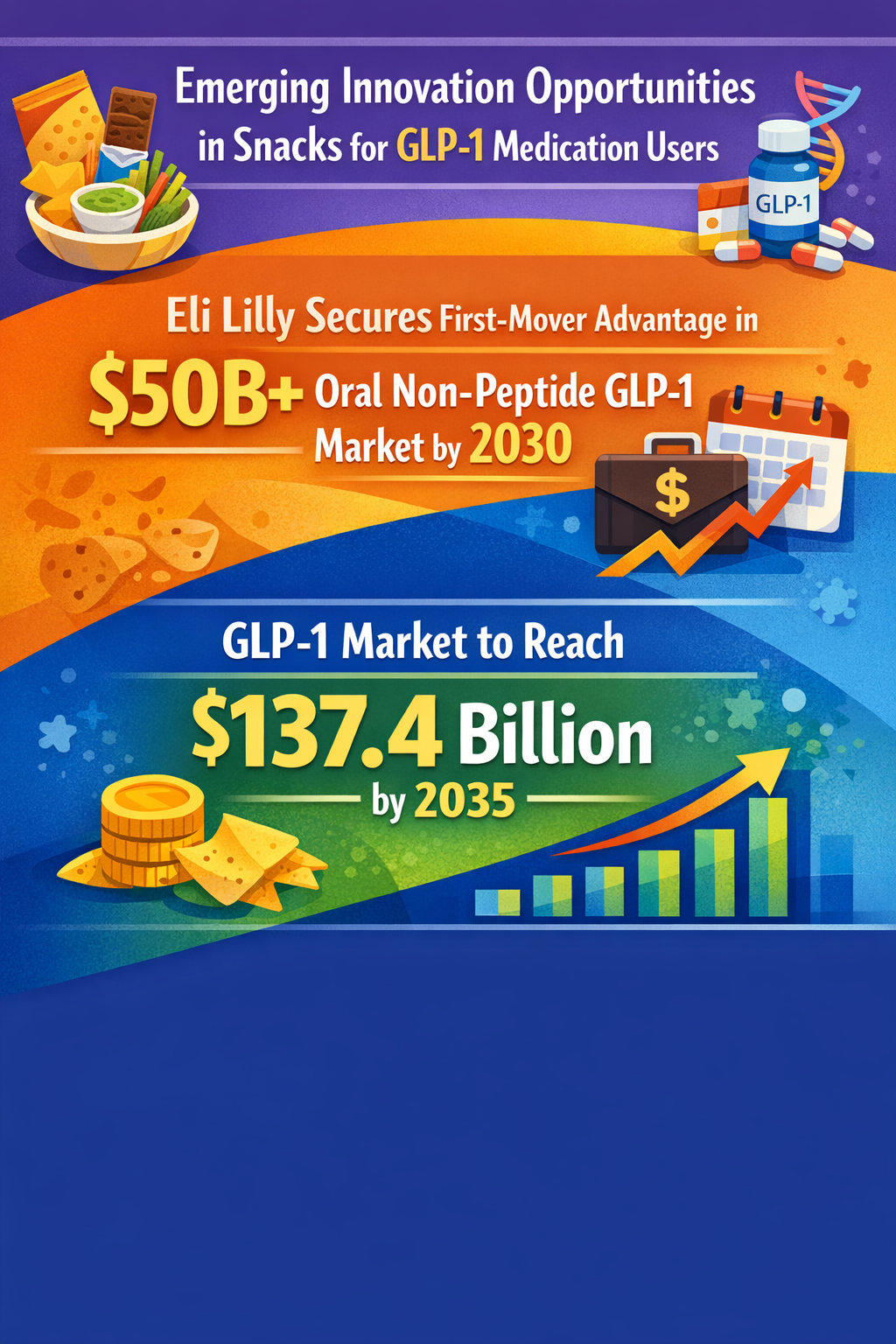
The implications ripple downstream. Consumer industries are recalibrating toward “functional snacking” and wellness product innovation inspired by the effectiveness of anti-obesity medications (Food Ingredients First 26/03/2024). This blending of medicalized weight reduction with upstream consumer behaviors further complicates ecosystem dynamics.
Disruption Pathway
The co-existence of extended patent protection alongside public reimbursement constitutes a novel disruption pathway in the diet drug domain. Prolonged exclusivity ensures high price points, generating profit stability but pressuring public programs and patients.
As Medicare/Medicaid pilots expand coverage, demand for patented GLP-1 therapies will surge, potentially creating fiscal stresses in public budgets that could increase political scrutiny on pricing and access frameworks. Health technology assessment bodies might be prompted to deepen cost-effectiveness criteria, urging innovator companies to demonstrate long-term benefits beyond weight loss metrics—including co-morbidity reductions and quality-of-life gains.
Greater public payer involvement may prompt insurance providers, employers, and private plans to adopt coverage, expanding market scale. This growth incentivizes pharmaceutical firms to accelerate next-generation GLP-1 molecules and combination therapies before patent cliffs emerge, reinforcing innovation cycles and potentially raising barriers to generic entry by broadening intellectual property portfolios or follow-on product claims.
However, this escalation introduces feedback loops—pressures to reduce unit costs could stimulate biosimilar development or force regulatory policy shifts like compulsory licensing or reference pricing. The increasing medicalization of weight management might alter healthcare delivery models, moving from episodic intervention toward chronic therapy management programs integrated into public health frameworks.
Ultimately, regulatory paradigms could shift from historically fragmented obesity treatment towards an integrated pharmaceutical-covered chronic disease model, with public payers, biotech innovators, and consumer markets becoming interconnected components rather than disparate sectors.
Why This Matters
From a capital allocation perspective, pharmaceutical companies with GLP-1 assets may continue to receive strong investor interest due to extended exclusivity and public payer adoption opening new, stable revenue streams.
Regulatory bodies must anticipate novel reimbursement frameworks balancing affordability with incentivizing innovation. The industrial structure may centralize as large innovators leverage patents and payer contracts, while generic producers face delayed entry, compelling diversification or international market focus.
Healthcare payers and governments are exposed to escalating expenditures on chronic pharmacotherapy for obesity, prompting governance challenges in coverage prioritization and budget allocation.
Meanwhile, adjacent sectors such as food and consumer packaged goods might shift product development strategies to complement or respond to this medicalized paradigm, investing in functional wellness products that align with obesity management goals.
Strategically, senior decision-makers must consider cross-sector partnerships, supply chain resilience in biologics manufacturing, and evolving liability frameworks around off-label use and long-term safety monitoring.
Implications
This development may structurally recalibrate obesity treatment from a largely discretionary, self-pay market toward a normalized, reimbursed chronic disease therapy. It might transform pharmaceutical innovation incentives, encouraging sustained R&D investment but potentially limiting price competition until well after the 2030s patent expiries.
Public coverage could increase equitable access and shift disease burden management but also introduce budgetary constraints and political risk pressures on drug pricing policies.
This signal should not be conflated with short-term hype around individual drug launches or transient spikes in consumer demand; rather, it reveals a systemic realignment of market and regulatory architectures.
Competing interpretations might argue that biosimilars from India and elsewhere will rapidly break patents’ grip (as some generic GLP-1 drugs are emerging), but the documented patent protections and US/EU regulatory environments suggest these are unlikely to significantly disrupt leading innovators’ dominance within the relevant horizon (Chemistry World 15/04/2024).
Early Indicators to Monitor
- Patent filings and litigation involving GLP-1 molecules and delivery mechanisms extending exclusivity beyond 2030
- Formal regulatory and CMS (Centers for Medicare & Medicaid Services) policy documents expanding or refining coverage parameters of GLP-1 medications
- Procurement volume shifts and reimbursement codes adoption in Medicare/Medicaid pilot program data
- Venture funding clustering in biotech firms developing next-gen GLP-1 analogues or competitors
- Emergence of cross-sector partnerships between pharma firms and consumer packaged goods companies targeting functional wellness
Disconfirming Signals
- Early termination or non-expansion of Medicare/Medicaid GLP-1 coverage pilots due to cost or clinical efficacy concerns
- Successful patent challenges, compulsory licensing, or regulatory decisions enabling broad generic or biosimilar market access well before the 2030s
- Significant adverse event reports or safety warnings undermining GLP-1 benefit-risk profiles, reducing payer willingness to cover extended indications
- Development of alternative obesity treatment paradigms (e.g., gene therapy, microbiome interventions) that disrupt GLP-1 market relevance within the forecast horizon
Strategic Questions
- How should capital allocation strategies evolve to balance the risks and opportunities presented by extended GLP-1 patent protection and emerging public reimbursement paradigms?
- What regulatory frameworks can ensure sustainable access to expensive biologic weight-loss drugs while maintaining incentives for pharmaceutical innovation?
Keywords
GLP-1; Medicare; Patent Protection; Obesity Pharmacotherapy; Pharmaceutical Innovation; Public Healthcare Coverage; Biotech; Health Regulation; Consumer Wellness
Bibliography
- Patent protection for semaglutide will remain in place in the US and Europe into the 2030s. Chemistry World. Published 15/04/2024.
- GLP-1 Medicare and Medicaid coverage will begin in 2026 through a pilot program called the GLP-1 bridge. RitterIM. Published 02/05/2024.
- Under the GLP-1 Bridge Program, Medicare will cover Wegovy specifically for weight loss - not just for diabetes management. Pound of Cure Weight Loss. Published 18/03/2024.
- The final driver in ADM's snack analysis spotlights emerging innovation opportunities from users of anti-obesity medications such as GLP-1. Food Ingredients First. Published 26/03/2024.
- Centers for Medicare & Medicaid Services (CMS) policy outlines on new drug coverage pilots (implicit from Medicare/Medicaid coverage announcements). CMS Newsroom. Published 2024 (multiple updates).